October 03, 2026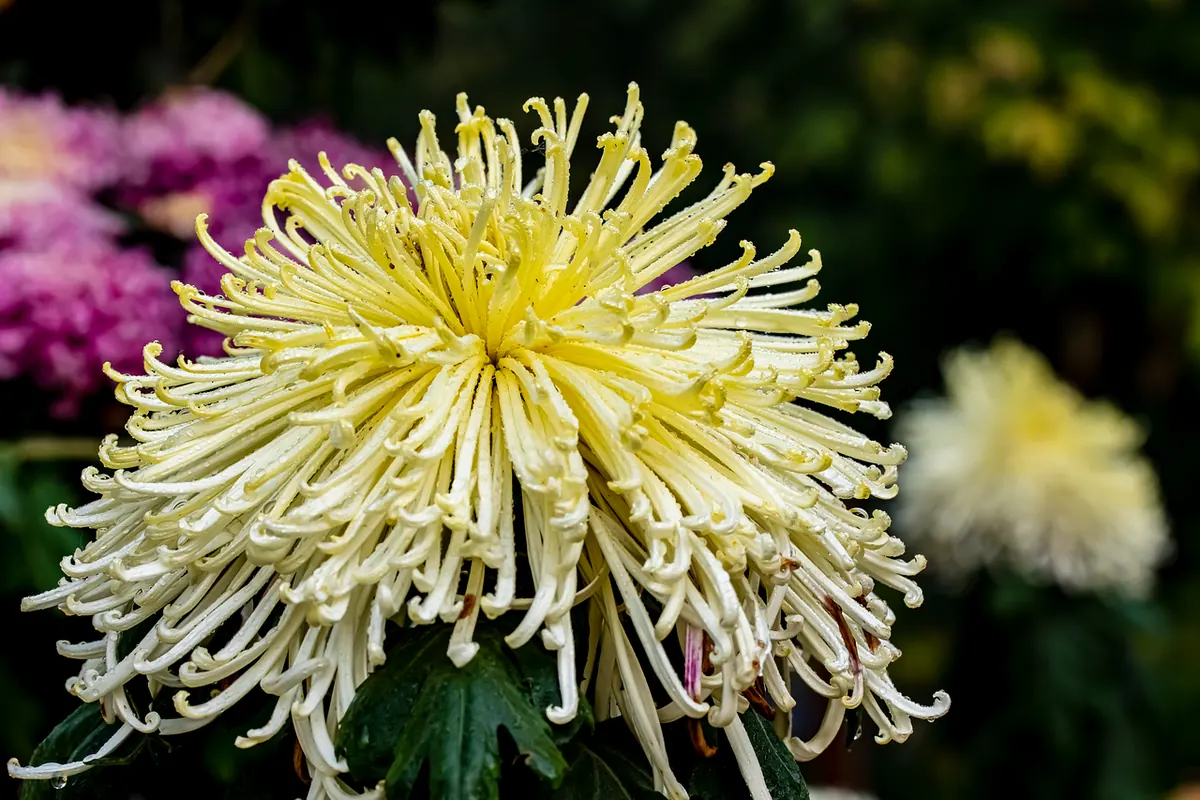
Autumn is the season that rewards British florists most. The cutting garden is still generous in September, and by November you are working with seed heads, hips, berries and foliage that hold their shape for weeks. What changes isn't the enthusiasm — it's the material. Light levels drop, growth slows, and stems behave differently once they are in the bucket. Knowing what is at its best in each of the three months is what separates a bouquet that looks tired by the weekend from one that still looks well on Monday.
Why autumn flowers behave differently
Shorter days push plants away from new growth and towards seed. That means fewer fresh buds, more pods, hips and drying stems, and a general shift in texture from soft to structural. Cooler nights slow the ageing of cut flowers, so a well-conditioned autumn bouquet often lasts longer than a July one — provided you look after it.
The other change is stiffness. Late-season stems are woodier, and woody stems take up water more slowly than soft ones. They need a longer drink, a fresh angled cut and, in many cases, a split or scrape at the base. Get that right in September and November becomes straightforward.
September: the last flush of summer
This is the month of abundance. Dahlias are at their peak — from the softness of pale peach and dusty pink varieties to dark, velvety reds that photograph almost black. Pompon and cactus types bring shape, while single-flowered dahlias bring a looser, pollinator-friendly feel.
Around them: cosmos, zinnias, late sunflowers, gladioli, rudbeckia, scabious, amaranthus, salvia and the first seed pods of crocosmia. Seed heads are worth cutting early this month. Leave them too long and they shatter in the hand.
September bouquets can look almost summery, so lean into the shift deliberately. Add one note of rust or bronze — a stem of cotinus, a few hips — and the arrangement reads as autumn rather than a leftover of August.
October: the turning point
Chrysanthemums take over as the backbone of the British autumn bouquet. Spray types give you a spray of small blooms on one stem; disbudded types give you a single large one. Single, daisy-faced chrysanthemums in bronze, ochre, deep pink and burgundy are the ones I reach for most — they have a friendlier face than the dense, cushion-flowered sorts.
Alongside them: Japanese anemones, nerines in their startling sugar-pink, sedums shifting from pink to rust, the last roses, and berries galore — rowan, hawthorn, cotoneaster and the many forms of hypericum.
A note on hydrangeas
October is when hydrangeas colour properly, moving from lime through blush to antique pink, blue and green-flushed cream. They are also the most misunderstood stems in the bucket. Split or crush the base of each stem, stand them in deep water, and mist the heads rather than the stems. Hydrangeas take in moisture through their petals as well as their stems, so a gentle misting in the first day or two makes a real difference. If a head flops, submerge it whole in cool water for an hour or so and it will usually come back.
November: structure, hips and dried material
By November, the British material is largely foliage, berries and chrysanthemums, with a few late roses if you have any shelter. This is not a limitation. It is the month when structure finally gets its turn.
Think copper beech, cotinus, oak, skimmia, Portugal laurel, berried ivy, and eucalyptus for a soft grey-green that flatters everything. Add seed heads: nigella, allium, poppy, honesty with its papery silver discs. Dried stems — strawflower, bunny tails, dried grasses — sit naturally here too.
Be honest with customers about what is local in November. Anything soft, frilly and out of character is likely imported or glasshouse-grown. That is fine, but knowing which parts of a bouquet are British lets you talk about it with confidence rather than guessing.
Autumn colour pairings that work
Autumn light in the UK is low, warm and often grey-tinged, which flattens washed-out pastels and muddles too many mid-tones together. Choose fewer colours, and choose them saturated.
- Rust and plum. Bronze chrysanthemums with burgundy dahlias or dark hellebore-like foliage.
- Copper and pink. Deep pink chrysanthemums with copper beech — the pairing I return to every year.
- Ochre and soft grey. Yellow-gold blooms with eucalyptus and dried grasses.
- Aubergine and cream. Almost-black dahlias, pale ranunculus if you have them, cream roses.
- Deep green and white. The clean November palette: evergreen foliage, white chrysanthemums, honesty.
One caution: keep green foliage in the mix even in the richest schemes. Without it, rusts and plums can read as heavy rather than warm.
Conditioning: how to make autumn stems last
- Cut in the cool of the morning or evening and plunge stems straight into a bucket of water.
- Strip the lower leaves. No foliage should sit below the waterline.
- Cut at an angle with sharp snips. For woody stems, split or scrape the bottom two to three centimetres.
- Condition in cool water for at least four hours, ideally overnight, somewhere cool and out of direct sun.
- Sap-heavy stems such as dahlias, zinnias and poppies benefit from searing: hold the base in just-boiled water for about ten seconds, then straight into cold water.
- Change the water every other day and re-cut the stems each time.
- Keep finished arrangements away from radiators, direct sun and bowls of fruit — ripening fruit releases ethylene, which shortens flower life.
A simple formula for an autumn bouquet
Build in four parts: one focal flower, one secondary flower or berry, one textural element, and one foliage. A November example: three bronze chrysanthemums, a handful of hypericum berries, two stems of berried ivy, a few sprays of eucalyptus and a piece of dried honesty for movement. Buy or cut stems at slightly different stages so the bouquet opens over several days rather than all at once.
If you are ordering from a florist, ask what is British-grown this week. Most will be glad to tell you, and you will get a bouquet that looks like the month it was made in rather than a copy of June.
Photo: 素君 / Pixabay