September 16, 2026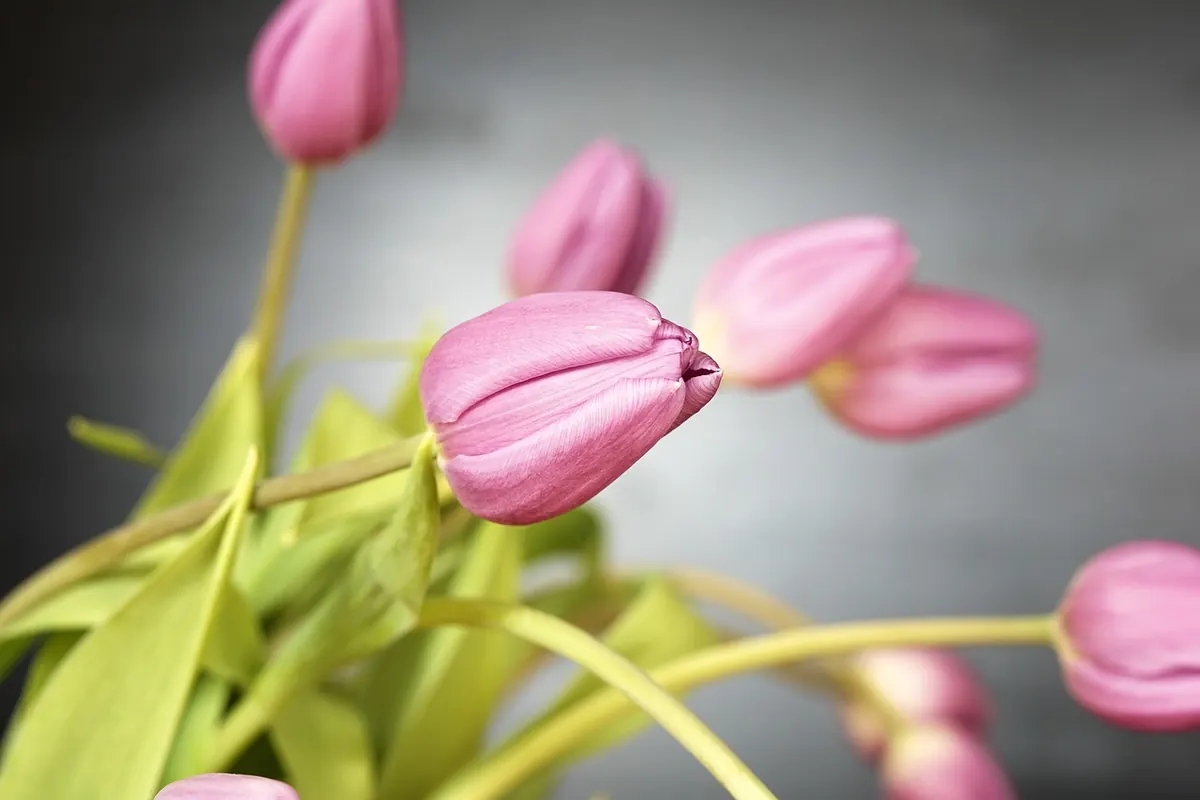
A bouquet is a small argument about time. Ask for peonies in February and you are asking for glasshouse heat, a long flight, or both. Ask for them in late May and you are asking for something a grower in Kent or Lincolnshire cut two or three days ago. Same flower, a completely different week in the vase.
British flowers have a season, and it moves with the weather. What follows is a month-by-month walk through the year, with the flowers worth asking for at each point and a few habits that make the difference between a bunch that lasts four days and one that lasts ten.
Why Season Matters More Than You Think
Flowers are living things with a timetable. A stem cut at the right moment, from a field within a few hours' drive, still has sugar in it, holds its shape longer, and usually smells of something. Imported cut flowers are bred for durability — stiffness, uniformity and a long journey — and scent is often the first thing sacrificed.
Buying in season tends to give better value, too. When British growers have a glut — sweet peas in July, dahlias in September — bunches get fuller and bolder. Out of season, you are paying for someone else's energy costs.
Seasons shift by a few weeks depending on where you are. Cornwall runs early, Aberdeenshire runs late, and a cold spring pushes everything back. Treat the months below as a guide and let the flowers in front of you have the last word.
December to February: Winter
Winter is where British growing shows its character, partly because so little of it is floral in the obvious sense. Expect hellebores with their downturned, dusty-petalled heads, early narcissi from the south-west, paperwhites, berried ivy, skimmia, and bare branches of willow or birch that will slowly open into catkins indoors.
Hellebores are the connoisseur's winter flower and they are fussy about water: they prefer a shallow depth and hate being submerged to the neck of the stem. If yours arrive in a tall vase, keep the level low and top it up often. A winter bouquet with one scented element — a sprig of rosemary, a single narcissus — will beat a much larger unscented bunch.
Some weeks in January are genuinely thin. That is honest seasonality, not a bad florist. Dried seedheads, grasses and foliage carry those weeks perfectly well.
March to May: Spring
March belongs to daffodils and narcissi, followed closely by flowering branches — blackthorn, cherry, forsythia. Keep daffodils in their own vase, at least for the first few hours: their stems release a sap that shortens the life of almost everything else. If you want them in a mixed arrangement, condition them separately in clean water overnight first and rinse the stems before they meet anything else.
April is tulip month. Buy them with buds still closed and slightly green at the tip, and give them cool water and a cool room — tulips continue to grow in the vase, so leave them room to lean. A shallow layer of water, a few centimetres, suits them better than a deep fill. Ranunculus, anemones, wallflowers, forget-me-nots and honest seedheads fill out the same weeks.
By late May the year turns: peonies, bearded iris, alliums, aquilegia, lilac and the first sweet rocket and cornflowers. Choose peony buds that feel like soft marshmallows when you squeeze them gently. Rock-hard buds may never open; fully blown ones will be gone in a day. If the bouquet is a gift you will not see opened, this is the month to be generous with buds rather than blooms.
June to August: Summer
Early summer is the peak of British cut flowers: roses, sweet peas, delphiniums, stocks, scabious, campanula, nigella, cornflowers and the first dahlias. British Flowers Week falls in June, which is a good moment to look up growers selling locally — farm shops, market stalls and growers' collectives often have more variety than any high street window.
Sweet peas are the test. Lean in and sniff; if there is nothing there, ask why. Old-fashioned varieties carry the strongest scent, and a scented bunch kept somewhere cool will perfume a whole room.
Through July and August you get dahlias, cosmos, sunflowers, zinnias, lavender, crocosmia and gladioli. Heat is the enemy now. Buy early in the day if you can, keep the bouquet out of direct sun, and do not leave it in a warm car while you finish your shopping — an hour in a hot boot can cost you several days of vase life.
September to November: Autumn
September and early October are dahlia weeks, and the range is enormous: pompons the size of a walnut, cactus types with their rolled petals, dark-leaved varieties that look almost black in low light. Asters, sedum, grasses, rosehips and hydrangeas turning antique green and dusty pink join them.
Hydrangeas are worth buying in autumn because they are one of the few flowers that age well. Keep them in a few centimetres of water and let it evaporate; the heads will dry in place and last for months.
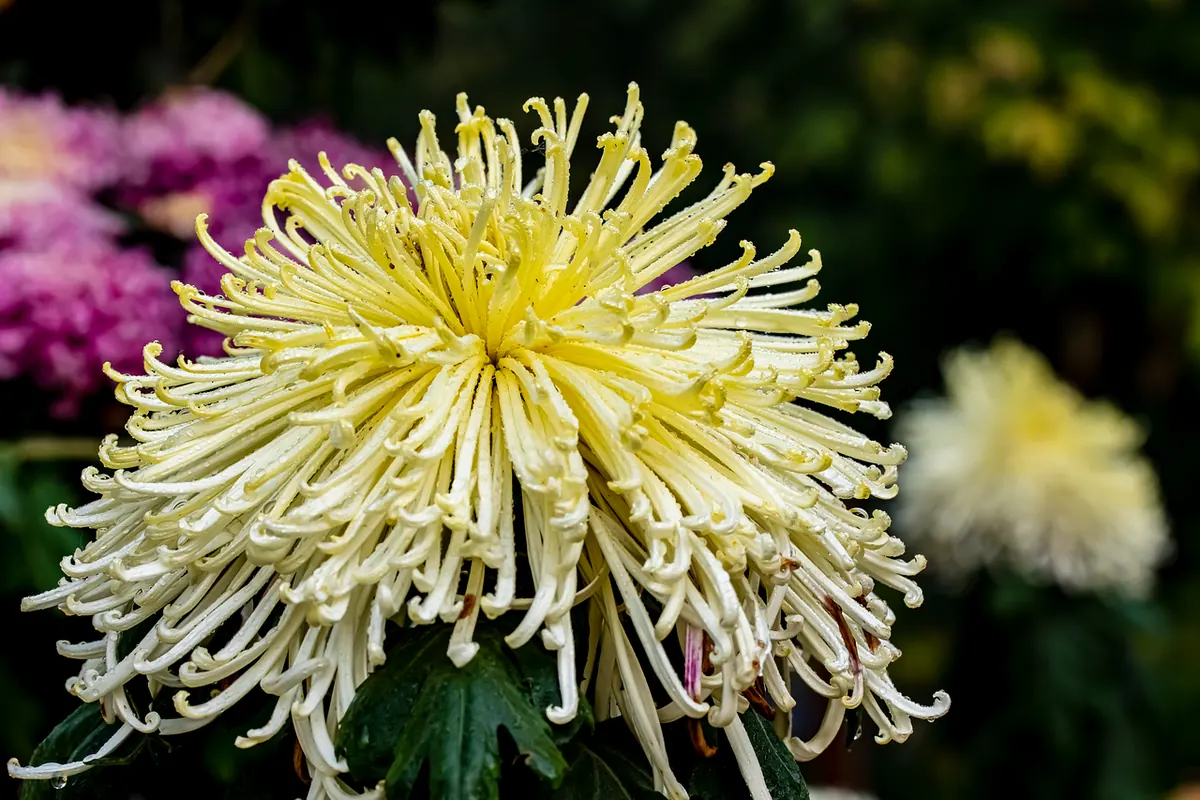
By November the bouquet becomes architecture. Dried hydrangeas, seedheads, berried ivy, eucalyptus, skimmia, rosehips and evergreens hold the shape, with a few chrysanthemums for colour. British spray chrysanthemums are underrated: sturdy, long-lasting and far more varied than the supermarket version suggests.
How to Pick Well at the Counter
Whatever the month, a few checks take ten seconds and save a week of disappointment.
- Stem ends: firm and clean, not slimy or browning. Cloudy water in the bucket is a warning sign.
- Heads: upright, with no brown petal edges and no loose petals lying on the wrapping paper.
- Foliage: crisp and green below the waterline, not yellowing or collapsing.
- Scent: lean in. Most British-grown flowers in season give you something.
- Condition: buds tight but not hard, colour already showing.
Four questions worth asking
- Which of these was grown in the UK this week?
- What is looking best right now?
- How long should this last, and what do I do in the first hour — re-cut the stems, fresh water, cool spot?
- Could I have two or three generous varieties instead of a wide mixed bunch?
That last question is the shortcut most people miss. A big bunch of one or two things that are at their peak almost always looks better than a fistful of everything, and it is usually cheaper.
Let the Season Choose for You
The simplest approach is to stop deciding and start asking. Walk into a florist, market stall or farm shop and say you would like whatever is at its best this week, grown as close to home as possible. You will end up with tulips in April, sweet peas in June, dahlias in September and hellebores in January — and each of them will look like the month they came from.
Photo: webandi / Pixabay